How to Display Family Photos Beautifully: Interior Designers Share Their Favorite Ideas
Family photographs are among the most personal things we own, yet incorporating them into a thoughtfully designed home can be surprisingly challenging. How do you display treasured memories without creating visual clutter? Can family portraits complement sophisticated interiors? And where should photographs go to feel like a natural part of the space?
In a recent House Beautiful article, design editor Marina Liao asked interior designers how they incorporate personal photography into their homes. Their recommendations offer a refreshing perspective: family photographs don’t have to compete with beautiful interior design. With thoughtful placement, quality materials, and a little restraint, they can become some of the most meaningful elements in a room.
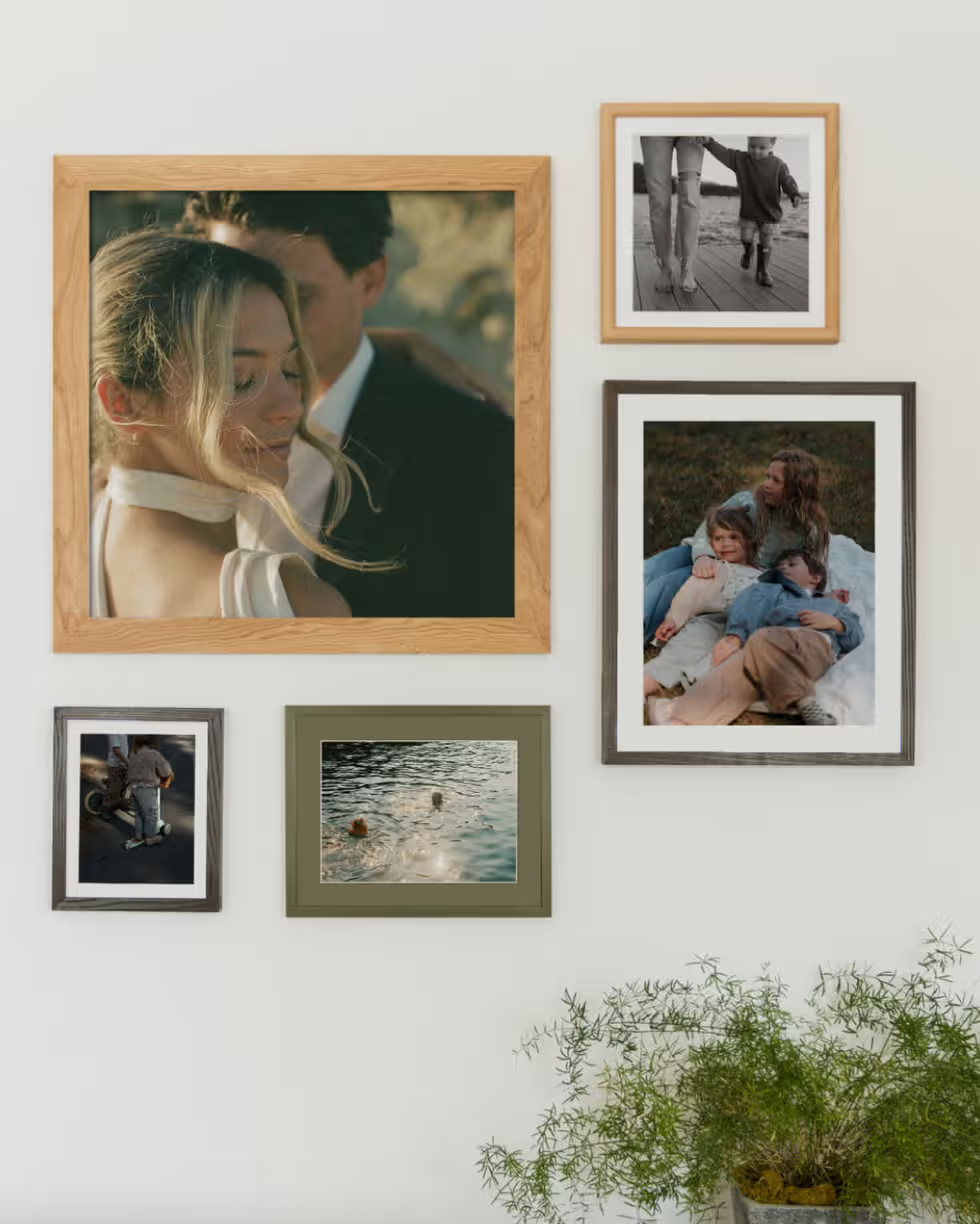
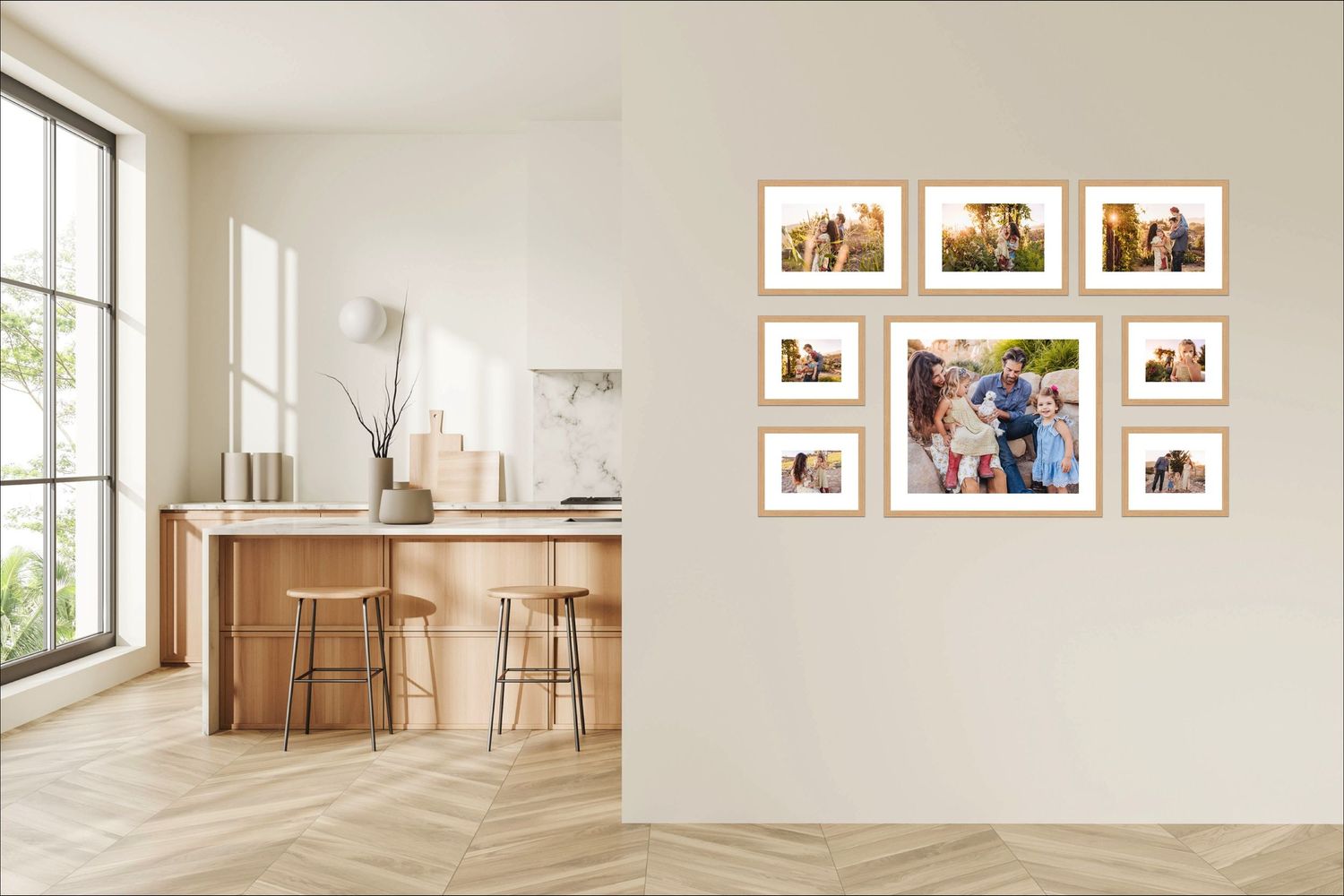
1. Create a Curated Gallery Wall
One of the most effective ways to display family photography is to treat it as a collection rather than a series of individual decorations.
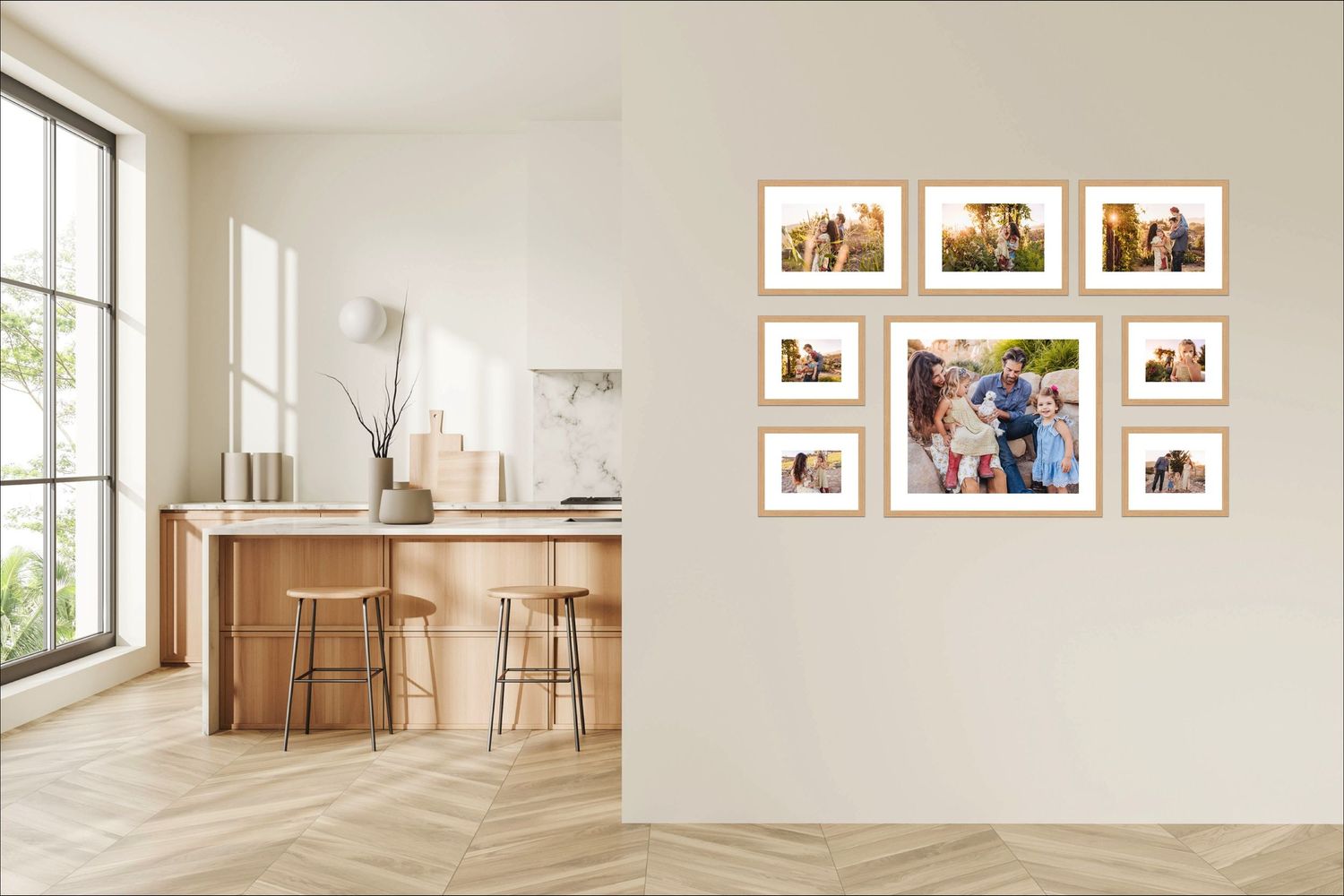
Interior designer Kate Hartman recommends grouping family photographs together, particularly in hallways, where the collection can unfold as someone moves through the space.
Her approach involves mixing frame styles while maintaining a cohesive color palette. Rather than every frame matching exactly, the collection feels as though it has been gathered over time.
For a more personal arrangement, consider mixing professional family portraits with candid snapshots, older family photographs, or small pieces of artwork. A handwritten note, wedding invitation, or family heirloom can add another layer of meaning.
The result is a gallery that feels collected rather than overly coordinated.
2. Style Photographs Alongside Books and Decorative Objects
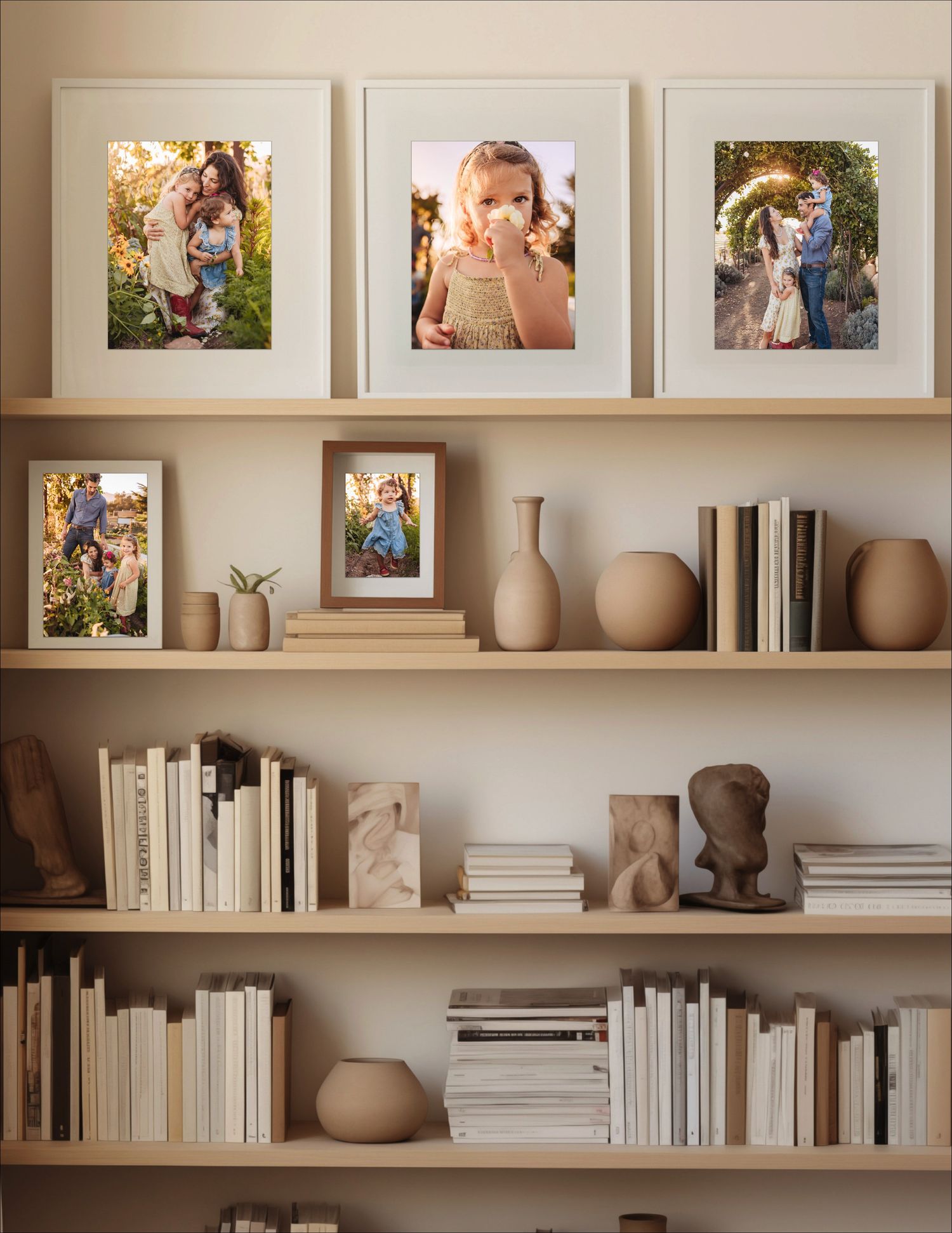
Not every photograph needs to be hung on a wall. Interior designer Ellie Christopher favors incorporating framed photographs into bookshelves, cabinets, and bedside tables, where they can sit alongside books, ceramics, and decorative objects.
This layered approach allows photographs to become part of a room’s overall composition.
A small silver frame nestled between favorite books, a family portrait beside a vase of fresh flowers, or several antique brass frames on a bedside table can feel both intimate and sophisticated.
Varying the heights and sizes of objects creates visual interest, while leaving a little breathing room keeps the arrangement from feeling crowded.
3. Choose Frames That Complement Your Home
The frame can have as much influence on the overall appearance of a photograph as the image itself.
Designer Alfredo Paredes, known for his work with Ralph Lauren and New York’s Polo Bar, favors a restrained selection of finishes, including black, white, burlwood, and mahogany. These materials work across a variety of interiors, from traditional homes filled with antiques to more contemporary spaces.
Antique frames can be especially beautiful for family photography. Their character and subtle imperfections lend a sense of history, even when the photographs inside are relatively new.
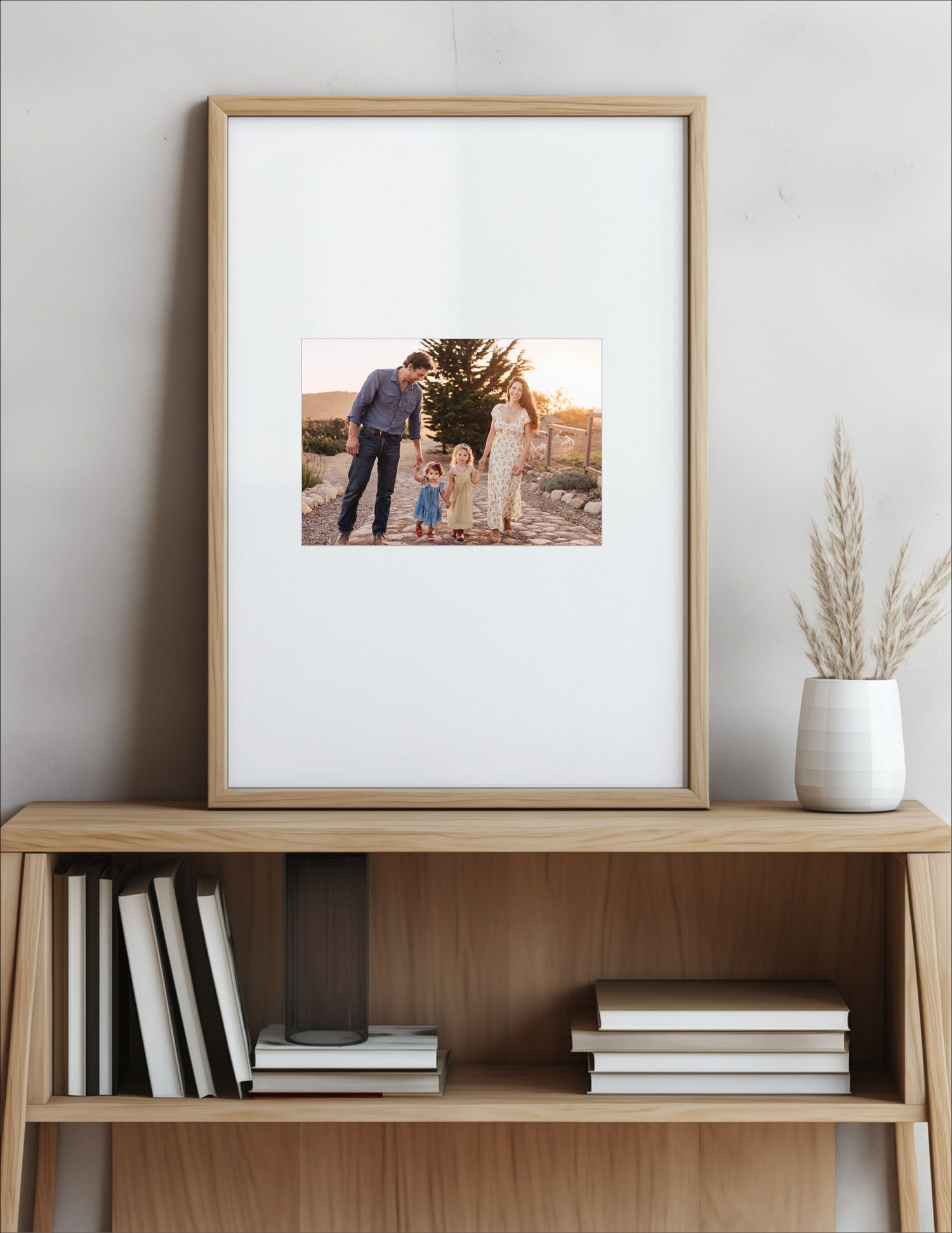
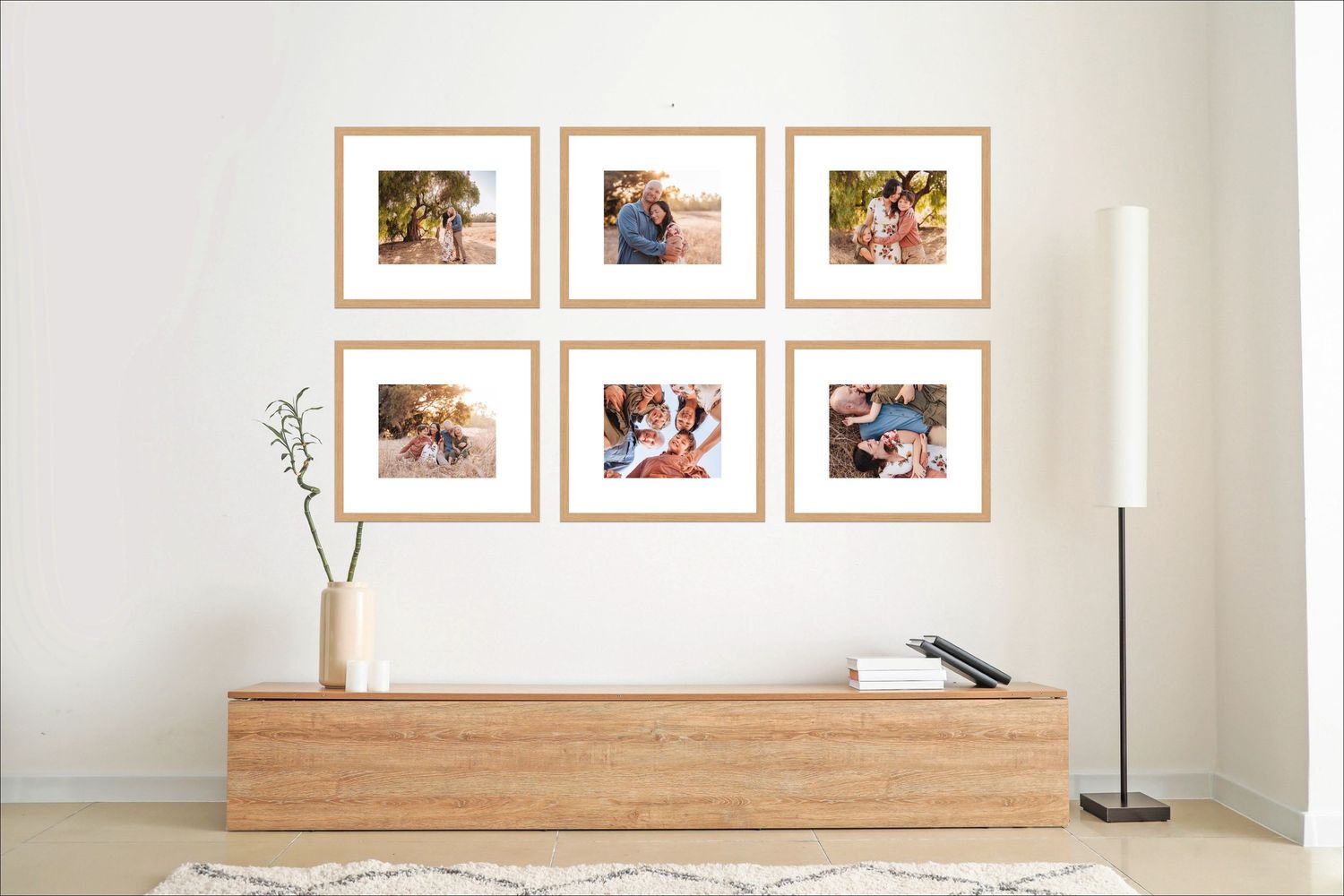
For a more contemporary look, simple frames with generous white matting can give photographs a gallery-like presentation.
The key is to select materials that complement the room rather than choosing frames independently of their surroundings.
4. Think Carefully About Size and Placement
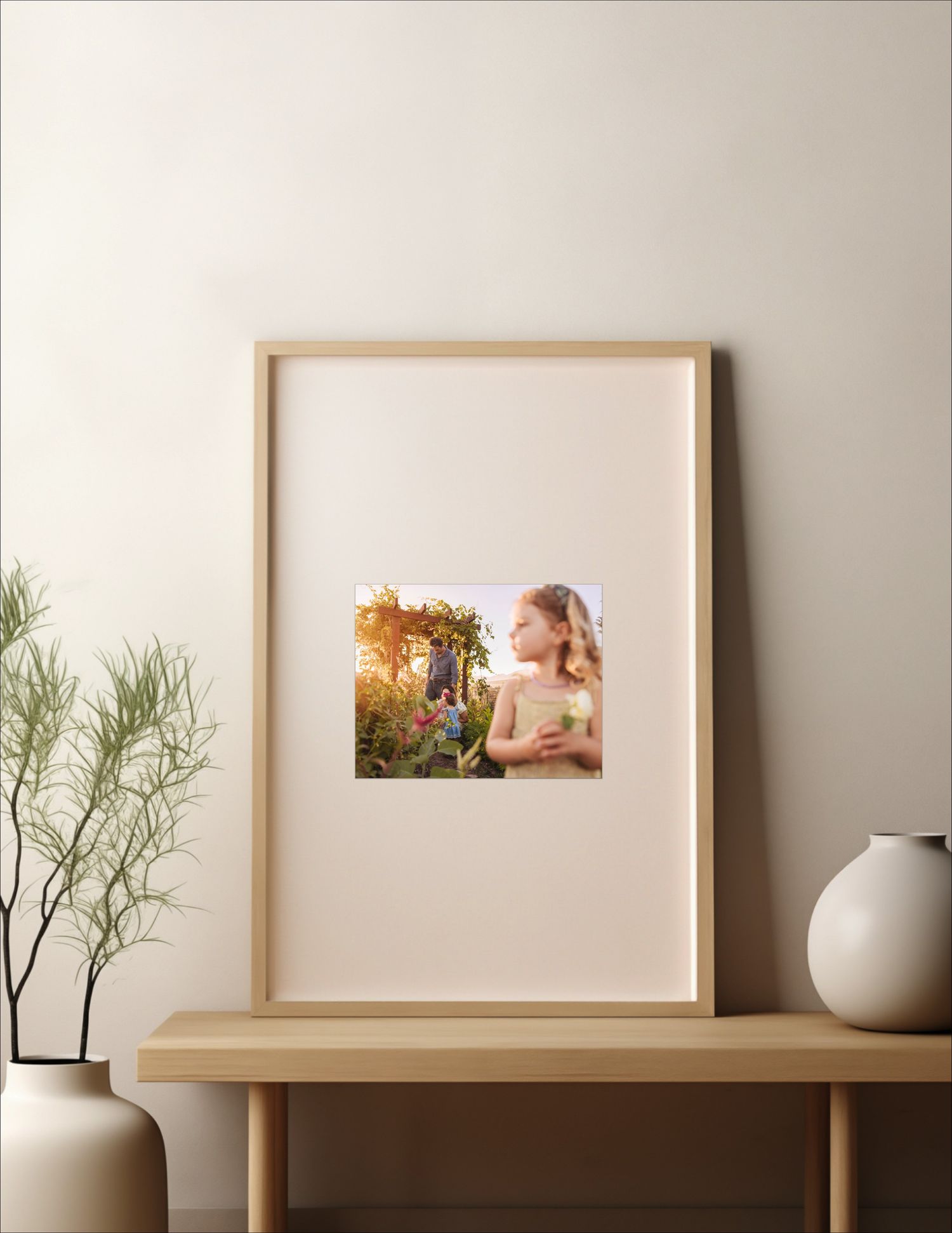
When it comes to displaying family photographs, bigger isn’t necessarily better.
Tessa Wolf, chief merchandise officer at Framebridge, suggests that personal photographs often feel more special at modest sizes, with many homeowners preferring prints measuring 9 by 12 inches or smaller.
A smaller photograph encourages people to come closer, creating a more intimate experience than an oversized portrait dominating a room.
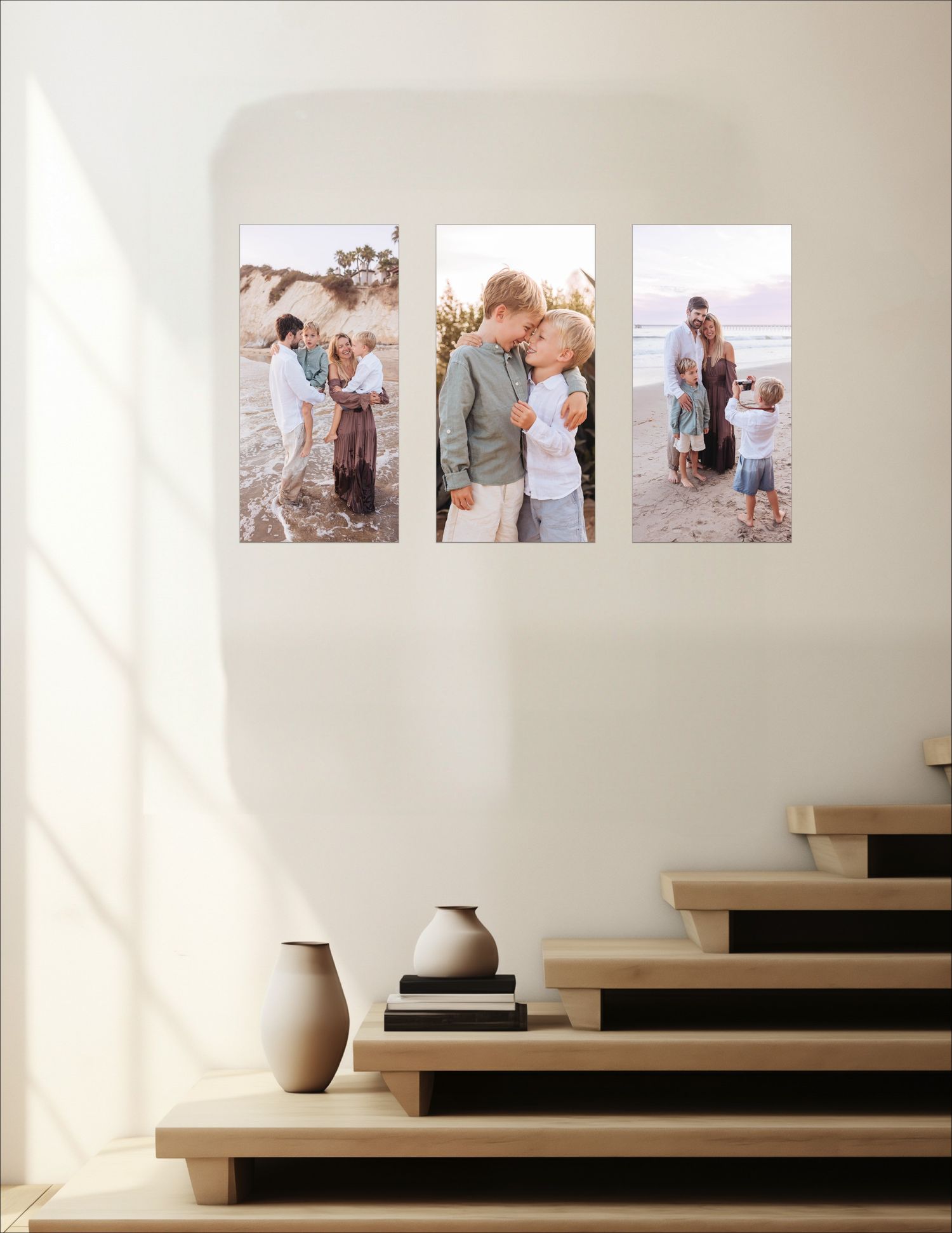
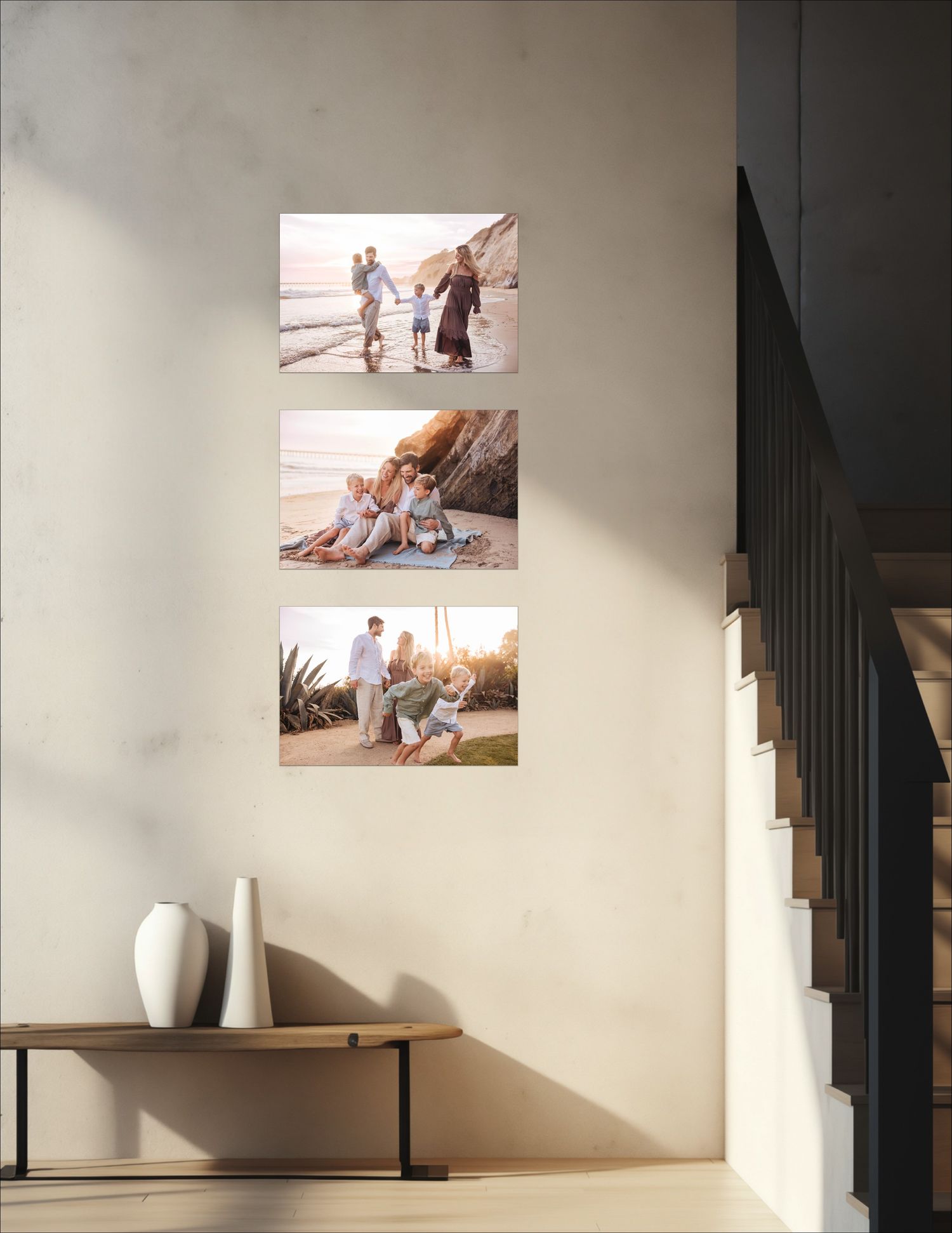
Hallways, staircases, bedrooms, home offices, and bookshelves are particularly well suited to family photography because these spaces allow images to be enjoyed at close range.
Of course, there are exceptions. A striking family photograph can work beautifully as a large piece of wall art, especially when the composition, colors, and surrounding architecture have been considered.
Vintage family photographs are another interesting possibility. Enlarging an old photograph of grandparents or great-grandparents can transform a piece of family history into something that feels almost like fine art.
5. Choose Fine-Art Prints Over Canvas
The material used to print a photograph can dramatically change how it looks in a room. Several designers interviewed by House Beautiful expressed a preference for traditional photographic prints over canvas. Corinne Ekle, principal designer at C2 Design, explains that canvas family portraits can sometimes feel more commercial than artistic, while fine-art prints displayed under glass often create a more refined appearance.
The distinction is particularly noticeable in homes where photography is displayed alongside original artwork, antiques, and carefully selected furnishings.
High-quality photographic paper, professional printing, and thoughtful matting allow the details, tones, and textures of an image to take center stage.
For families investing in professional photography, the printing and presentation deserve just as much consideration as the photographs themselves.
6. Make Printed Photographs Part of Everyday Life
Perhaps the most meaningful observation in the House Beautiful article comes from interior design duo Jordan Slocum and Barry Bordelon, known as the Brownstone Boys. Discussing their preference for printed photographs over digital frames, they describe the grounding quality of a physical image that gradually becomes part of a room. It’s an important distinction. Digital photographs are convenient, but they often disappear into our phones, computers, and cloud storage. We may have thousands of images of the people we love without regularly seeing any of them. A printed photograph is different. It becomes part of the physical environment. A photograph of your children on a bedside table, a family portrait in the hallway, or an album on the coffee table is a quiet reminder of the relationships and memories that matter most.
As a Santa Barbara family photographer, I believe this is one of the most important reasons to print photographs.
The moments I photograph are often ordinary interactions between family members: a child reaching for a parent’s hand, siblings laughing together, or grandparents surrounded by their grandchildren. These images become increasingly meaningful as families grow and change. It’s also why I include a professionally designed album with my full family photography sessions. An album allows photographs to be enjoyed as a collection, without needing to find wall space for every favorite image.
Beautifully printed albums can become part of the home as well, displayed on coffee tables or bookshelves and brought out to revisit together.
A Beautiful Home Should Also Feel Personal
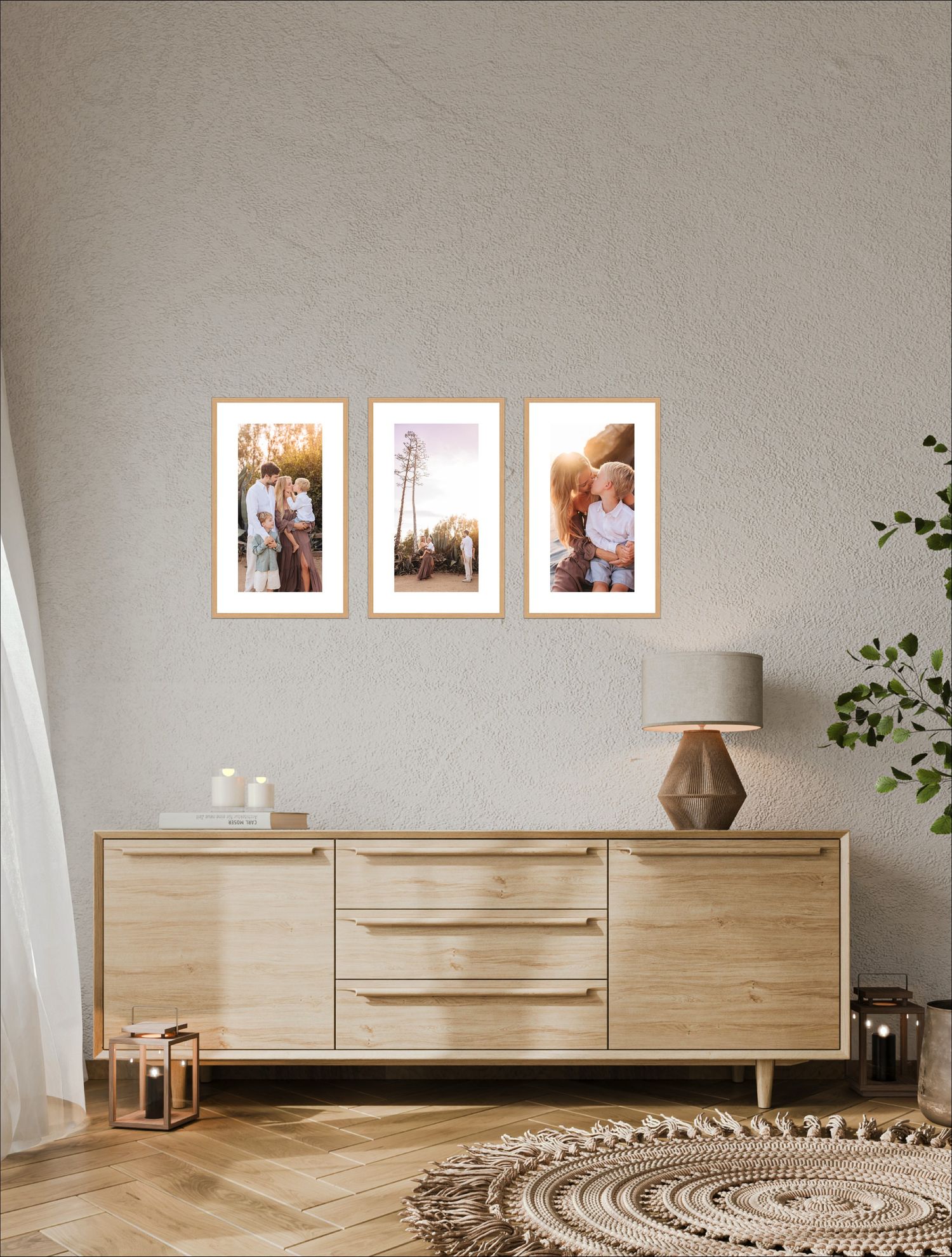
Interior design is about more than creating a visually appealing space. The most memorable homes reflect the personalities, histories, and relationships of the people who live in them. Family photography offers a unique opportunity to bring those stories into the design.
Whether displayed in an antique silver frame, arranged along a staircase, or collected in an heirloom album, printed photographs can add warmth and individuality to even the most sophisticated interiors.
And while digital photographs certainly have their place, there is something irreplaceable about living with physical images. The photographs we choose to print become part of our surroundings, quietly connecting us to the people and moments that have shaped our lives. Perhaps that’s what makes them such an important part of a well-designed home.
Not simply because they look beautiful, but because they make the space feel like ours.
Inspired by Marina Liao’s article, “Designers Swear by These 6 Surprisingly Stylish Ways to Display Family Photos,” published in House Beautiful, August 2026. Designer perspectives are credited to the original reporting.
Tristin Tracy is a Santa Barbara family photographer specializing in candid, connection-focused family photography. Her full sessions include a professionally designed printed album.